In today’s fast-moving digital world, slang terms spread faster than ever, and one term that often sparks curiosity—and sometimes confusion—is “FOB.” If you’ve seen it online, heard it in conversations, or come across it on social media, you might be wondering: what does FOB actually mean in slang?
This article dives deep into the FOB meaning slang, exploring its origins, modern usage, cultural implications, and how to use (or avoid) it appropriately. Whether you’re here to understand the term better or avoid misusing it, this guide will give you everything you need.
What Does FOB Mean in Slang?
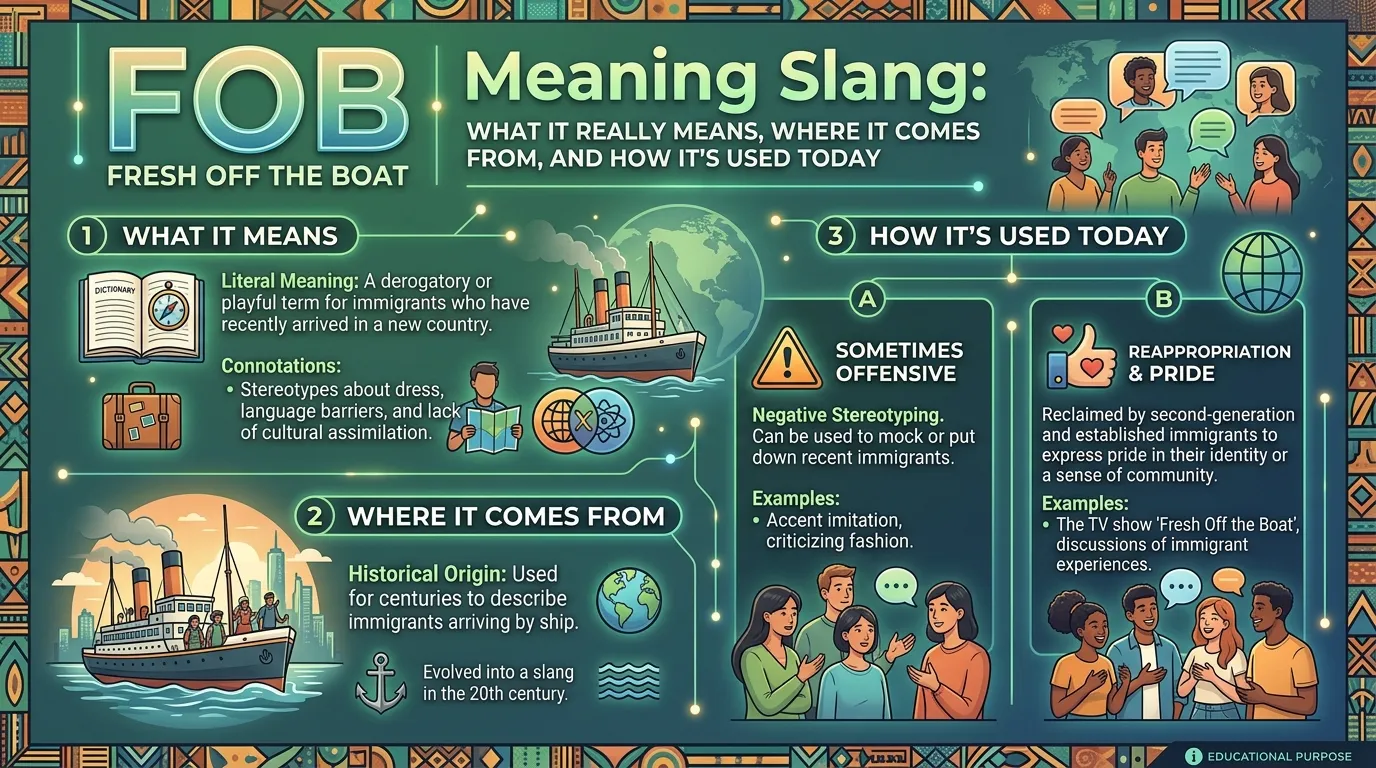
The slang term FOB stands for:
“Fresh Off the Boat.”
Originally, it was used to describe immigrants who had just arrived in a new country, particularly from Asia, Africa, or Latin America. The phrase paints a picture of someone literally stepping off a boat into a new culture.
Simple Definition
- FOB (slang): A person who is perceived as new to a country and unfamiliar with its culture, language, or social norms.
Origin of the Term “FOB”
Understanding the roots of slang helps clarify how it’s used today.
Historical Background
- The phrase “Fresh Off the Boat” dates back to the late 19th and early 20th centuries.
- It was commonly used in countries like the United States to describe new immigrants arriving by ship.
- Over time, it evolved into the acronym FOB, especially in casual and online conversations.
Cultural Evolution
Initially descriptive, the term gradually became:
- A label used within immigrant communities
- A slang expression used by others—sometimes humorously, sometimes critically
Is FOB Offensive or Neutral?
This is where things get important.
Context Matters A Lot
The term FOB can be either neutral, humorous, or offensive, depending on how it’s used.
Potentially Offensive Use
- When used to mock someone’s accent, clothing, or behavior
- When implying someone is “less modern” or “uncultured”
- When directed at someone in a derogatory tone
Neutral or Reclaimed Use
- Some people within immigrant communities use it jokingly or as a form of identity
- It can be used in storytelling or cultural discussions
👉 Bottom line: If you’re unsure, it’s safer to avoid using the term casually, especially with people you don’t know well.
How FOB Is Used in Everyday Slang
Let’s look at how the term appears in real-life conversations.
Examples in Sentences
- “He just moved here last month—he’s still kind of FOB.”
- “When I first came here, I felt totally FOB.”
- “That style is so FOB!” (⚠️ often used negatively)
Online & Social Media Use
You might see FOB used in:
- TikTok captions
- Memes
- Comment sections
- Cultural discussions
Sometimes it’s used humorously, but other times it crosses into stereotyping.
Common Misunderstandings About FOB
Many people misinterpret the meaning or usage of this slang term. Let’s clear that up.
Myth vs Reality
| Myth | Reality |
|---|---|
| FOB only refers to Asians | It can refer to any immigrant group |
| It’s always offensive | It depends on tone and context |
| It means someone is uneducated | It actually refers to being new to a culture, not intelligence |
| Everyone is okay with it | Many people find it disrespectful |
FOB in Pop Culture and Media
The term has also appeared in entertainment, shaping how people perceive it.
Examples
- TV shows featuring immigrant experiences sometimes use the term
- Comedy sketches may exaggerate “FOB behavior” for humor
- Social media influencers occasionally reclaim the term
Impact
While it can raise awareness of immigrant experiences, it can also:
- Reinforce stereotypes
- Normalize insensitive language
Related Slang Terms and Alternatives
If you’re exploring slang, you might come across similar or related terms.
Related Terms
- Newbie: Someone new to something (neutral)
- Immigrant: A formal, respectful term
- Foreigner: Can be neutral or sensitive depending on tone
- ABC (American-Born Chinese): Refers to second-generation immigrants
- Expat: Someone living outside their home country (often used for professionals)
Better Alternatives
If you want to avoid offending anyone, consider using:
- “New to the country”
- “Recently moved here”
- “International student”
- “First-generation immigrant”
FOB vs. ABC: What’s the Difference?
This comparison is common in cultural discussions.
| Term | Meaning |
|---|---|
| FOB | Someone newly arrived, less familiar with local culture |
| ABC | American-born individual with Chinese heritage |
Key Differences
- FOB focuses on recent arrival
- ABC focuses on birthplace and upbringing
Why the Term FOB Can Be Problematic
Even if used casually, the term can have deeper implications.
Issues to Consider
- Stereotyping: Assumes all newcomers behave the same
- Cultural bias: Implies one culture is “better” or “more advanced”
- Exclusion: Can make people feel like outsiders
Real-World Impact
Words shape perceptions. Using terms like FOB carelessly can:
- Hurt someone’s confidence
- Reinforce social divisions
- Promote cultural misunderstanding
When (and When Not) to Use FOB
Appropriate Situations
- Academic discussions about slang
- Cultural analysis
- Self-referential humor (if the person is comfortable)
Avoid Using It When
- Talking about someone you don’t know well
- In professional settings
- In a mocking or judgmental tone
FOB in Modern Internet Culture
Today, slang evolves quickly—and FOB is no exception.
Trends
- Used in memes with exaggerated stereotypes
- Sometimes reclaimed in identity-based humor
- Discussed in debates about cultural sensitivity
Shift in Awareness
More people today are:
- Questioning outdated slang
- Promoting inclusive language
- Calling out harmful usage online
Practical Examples: Respectful vs. Offensive Use
Respectful
- “She recently moved here and is still adjusting to the culture.”
Offensive
- “He’s so FOB, he doesn’t know anything.”
👉 Notice how one focuses on experience, while the other judges identity.
How to Talk About Cultural Differences Respectfully
Instead of relying on slang, try these approaches:
Better Communication Tips
- Be curious, not judgmental
- Ask respectful questions
- Avoid assumptions
- Use people-first language
Example
Instead of:
“That’s so FOB.”
Say:
“That’s interesting—does that come from your culture?”
FAQs About FOB Meaning Slang
1. What does FOB stand for in slang?
FOB stands for “Fresh Off the Boat,” referring to someone new to a country or culture.
2. Is FOB always offensive?
No, but it can be offensive depending on context and tone. It’s safer to use neutral language.
3. Who does the term FOB apply to?
It can apply to any immigrant group, not just one ethnicity.
4. Can people use FOB to describe themselves?
Yes, some people reclaim the term for humor or identity, but this varies by individual.
5. What are better alternatives to FOB?
Use phrases like:
- “New to the country”
- “Recent immigrant”
- “International student”
6. Why is FOB considered problematic?
Because it can reinforce stereotypes, exclude people, and imply cultural superiority.
7. Is FOB still used today?
Yes, especially online, but awareness of its impact is growing, and many people are choosing more respectful language.
Conclusion: Understanding FOB in Today’s World
The FOB meaning slang goes beyond a simple definition—it carries history, cultural weight, and social implications. While it started as a descriptive term, its modern use can sometimes be hurtful or misunderstood.
Key Takeaways
- FOB means “Fresh Off the Boat”
- It refers to new immigrants adjusting to a culture
- Its meaning depends heavily on context and tone
- It can be offensive if used carelessly
- There are more respectful alternatives available
Actionable Tips
- Think before using slang with cultural implications
- Choose inclusive, respectful language
- Stay informed about evolving social norms
In a diverse and connected world, the words we choose matter more than ever. By understanding terms like FOB and using language thoughtfully, you contribute to better communication, respect, and cultural awareness.