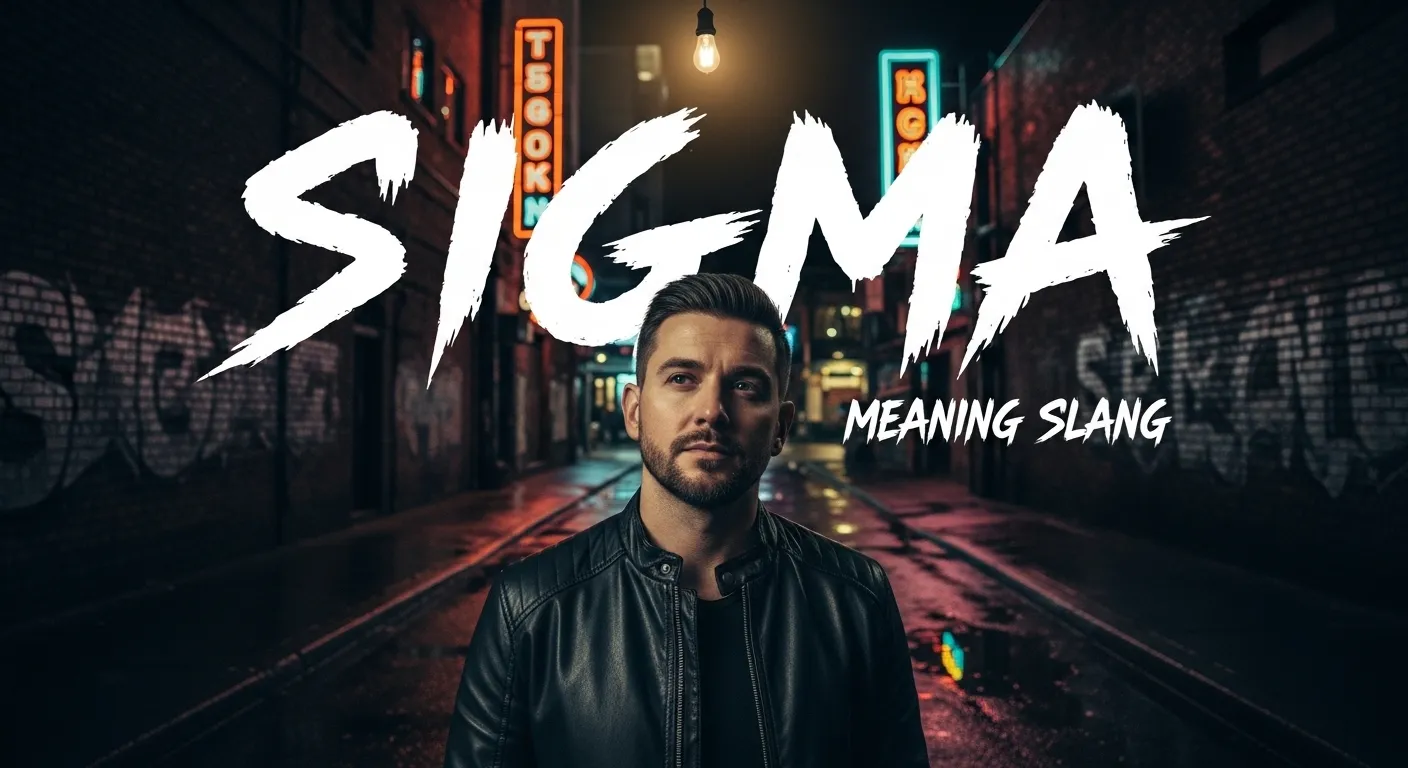
In today’s fast-moving world of internet culture, new slang terms pop up constantly—but only a few truly stick. One of the most talked-about and misunderstood terms is “sigma”. If you’ve seen phrases like “sigma male mindset,” “stay sigma,” or memes about lone wolves, you’re not alone.
But what does sigma meaning slang actually mean? Is it just another internet trend, or does it carry a deeper social meaning?
In this guide, you’ll learn everything you need to know about sigma slang, including its definition, origins, real-world use, examples, misconceptions, and how it compares to other personality labels like alpha and beta.
What Does Sigma Mean in Slang?
At its core, “sigma” is slang used to describe a person—usually a man—who is:
- Independent
- Self-reliant
- Quietly confident
- Not interested in social hierarchies
- Focused on personal goals
👉 In simple terms:
A sigma male is someone who “does their own thing” and doesn’t need validation or leadership roles to feel successful.
Sigma Meaning Slang (Simple Definition)
Sigma (slang):
A person who operates outside traditional social hierarchies, often seen as a “lone wolf” who is successful without seeking attention or approval.
Where Did the Sigma Slang Come From?
The term “sigma male” originates from online discussions about social hierarchies, particularly in the “manosphere” and self-improvement communities.
Timeline of Sigma Slang
- Early 2010s: Discussions about alpha and beta personalities dominate forums
- Mid-2010s: The idea of a “sigma male” emerges as an alternative
- 2020–2022: TikTok and YouTube popularize sigma memes
- 2023–2026: Becomes mainstream slang used in jokes, motivation, and memes
Social media played a massive role. Platforms like TikTok turned “sigma” into a viral identity associated with:
- Silent success
- Emotional control
- Minimalism
- Anti-social (but not awkward) behavior
Sigma vs Alpha vs Beta: What’s the Difference?
To understand sigma slang fully, it helps to compare it with other popular labels:
| Type | Traits | Social Role |
|---|---|---|
| Alpha | Leader, dominant, outgoing | At the top of hierarchy |
| Beta | Follower, agreeable, less assertive | Lower in hierarchy |
| Sigma | Independent, self-sufficient, reserved | Outside the hierarchy |
👉 Key takeaway:
A sigma doesn’t compete for status—they simply ignore the system altogether.
Why Is Sigma Slang So Popular?
The rise of sigma slang isn’t random—it reflects modern attitudes toward success and individuality.
Reasons Behind Its Popularity
- Rejection of traditional roles
Many people no longer relate to rigid “alpha vs beta” labels - Appeal of independence
Being self-reliant is widely admired - Introvert representation
Sigma traits resonate with quieter personalities - Social media influence
Viral videos glamorize the “lone wolf” lifestyle - Motivational content
Sigma mindset is often tied to discipline and success
Common Sigma Traits (According to Slang Usage)
While definitions vary, sigma slang usually includes these characteristics:
Personality Traits
- Quiet confidence
- Emotional control
- Minimal need for attention
- Strong self-discipline
- Independent thinking
Behavioral Traits
- Works alone rather than in groups
- Avoids unnecessary social drama
- Focuses on long-term goals
- Observes more than speaks
How People Use Sigma in Everyday Slang
Sigma isn’t just a label—it’s used in conversations, memes, and captions.
Examples in Sentences
- “He didn’t argue, just walked away… total sigma move.”
- “I’m staying focused this year—sigma mindset only.”
- “Bro skipped the party to work on his goals. Sigma energy.”
Popular Sigma Phrases
- Sigma mindset – Focused, disciplined thinking
- Stay sigma – Keep being independent
- Sigma energy – Quiet confidence
- Sigma grindset – Working hard without showing off
Sigma in Memes and Internet Culture
Sigma slang exploded thanks to memes, often featuring characters who embody the “lone wolf” archetype.
Common Sigma Meme Themes
- Walking away from drama
- Ignoring social expectations
- Silent success
- Minimal talking, maximum action
Popular “Sigma Characters” in Memes
- John Wick
- Patrick Bateman (American reckless)
- Thomas Shelby (Peaky Blinders)
These characters are often portrayed as:
- Emotionally controlled
- Strategic
- Independent
Misconceptions About Sigma Slang
Despite its popularity, sigma slang is often misunderstood.
1. Sigma Means Anti-Social
Not exactly.
👉 Sigma individuals may prefer solitude, but they’re not necessarily socially incapable.
2. Sigma Is Better Than Alpha
This is subjective.
👉 Sigma is just a different personality style, not inherently superior.
3. Sigma Means Being Cold or Emotionless
False.
👉 It usually refers to emotional control, not lack of feelings.
4. It’s a Scientific Personality Type
Nope.
👉 Sigma is an internet-created concept, not a psychological classification.
Sigma vs Lone Wolf: Are They the Same?
The terms are closely related but not identical.
| Concept | Meaning |
|---|---|
| Lone Wolf | Prefers to be alone |
| Sigma | Chooses independence but can navigate social situations |
👉 A sigma can function socially—they just don’t depend on it.
Related Slang Terms You Should Know
If you’re exploring sigma slang, you’ll likely come across these:
- Alpha male – Dominant leader personality
- Beta male – More passive or follower type
- Omega male – Completely outside social structure, often isolated
- NPC – Someone who follows the crowd without thinking
- Main character energy – Acting like the center of your own story
Is Sigma Slang Positive or Negative?
It depends on how it’s used.
Positive Interpretations
- Independence
- Confidence
- Self-discipline
- Focus on personal growth
Negative Interpretations
- Emotional detachment
- Avoiding healthy relationships
- Over-glorifying isolation
👉 Balance matters. Independence is valuable—but total isolation isn’t always healthy.
Real-Life Examples of Sigma Behavior
Here are some practical, relatable scenarios:
Example 1: Workplace
Instead of competing for attention, a sigma quietly delivers high-quality work and lets results speak.
Example 2: Social Situations
They attend events selectively and don’t feel pressured to fit in.
Example 3: Personal Goals
They focus on long-term success rather than short-term validation (likes, praise, etc.).
Should You Try to Be “Sigma”?
Here’s the honest answer:
Trying too hard to fit any label—including sigma—misses the point.
Instead, focus on:
- Building confidence
- Developing independence
- Improving self-discipline
- Maintaining healthy relationships
👉 The goal isn’t to “be sigma”—it’s to become a well-rounded person.
FAQs About Sigma Meaning Slang
1. What does sigma mean in texting?
In texting, sigma usually refers to someone acting independent, confident, or emotionally controlled—often used humorously or admiringly.
2. Is sigma a real personality type?
No, it’s not a scientific or psychological category. It’s an internet slang concept.
3. Can women be sigma?
Yes. While the term often refers to men, the traits—independence, confidence, self-reliance—can apply to anyone.
4. Is being sigma the same as being introverted?
Not exactly.
Introverts prefer less social interaction, while sigmas choose independence regardless of social ability.
5. Why is sigma trending on TikTok?
Short-form videos, motivational edits, and memes have made sigma behavior look appealing and relatable.
6. Is sigma mindset healthy?
It can be—if balanced. Independence and discipline are great, but avoiding all social connection isn’t.
7. What is a sigma move?
A sigma move is an action that shows independence, confidence, or refusal to follow social pressure.
Final Thoughts
The term “sigma meaning slang” reflects a shift in how people view success, confidence, and individuality. Instead of chasing dominance (alpha) or following others (beta), sigma represents a third path:
👉 Quiet confidence + independence + self-direction
But here’s the reality:
Sigma isn’t a rulebook—it’s a loose idea shaped by internet culture.
Key Takeaways
- Sigma slang describes independent, self-reliant individuals
- It gained popularity through memes and social media
- It’s not a scientific personality type
- Balance is more important than labels
Actionable Tips
- Focus on building real confidence, not labels
- Develop independence without isolating yourself
- Use sigma ideas as inspiration—not identity