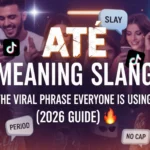
If you’ve spent any time on social media lately, you’ve probably seen comments like “she ate,” “you ate that,” or “ate and left no crumbs.” But what exactly does “ate” mean in slang, and why is it everywhere right now?
In this comprehensive guide, we’ll break down the meaning of “ate” in slang, its origins, how to use it correctly, examples from real life, and common mistakes to avoid. Whether you’re trying to keep up with TikTok trends or just want to sound more natural in conversations, this article has you covered.
🔍 What Does “Ate” Mean in Slang?
In modern slang, “ate” means:
👉 To do something extremely well, confidently, or impressively.
It’s a compliment used to praise someone’s performance, appearance, style, or achievement.
Simple Definition:
- “Ate” = You did amazing / You nailed it / You crushed it
💬 Examples of “Ate” in Everyday Use
Here are some common ways people use “ate” in slang:
- “That outfit? You ate 🔥”
- “She ate that performance!”
- “He ate and left no crumbs 👏”
- “You really ate that presentation”
Real-Life Situations:
- Someone delivers a powerful speech → “You ate that!”
- A friend posts a stunning photo → “ATE 🔥🔥🔥”
- A dancer performs perfectly → “She ate and left no crumbs”
📱 Why Is “Ate” Trending Right Now?
The slang “ate” exploded in popularity thanks to:
1. Social Media Platforms
- TikTok
- YouTube Shorts
Short-form content made expressive slang like “ate” go viral quickly.
2. Pop Culture & Influencers
Celebrities, influencers, and creators frequently use the phrase in:
- Comment sections
- Reaction videos
- Livestreams
3. Short, Punchy Expression
“Ate” is:
- Quick to type
- Easy to understand
- Emotionally strong
That’s why it works perfectly in fast-paced online conversations.
🧠 The Origin of “Ate” Slang
The slang use of “ate” didn’t appear overnight. It has roots in:
🎭 Ballroom & Drag Culture
The phrase comes from Black and LGBTQ+ ballroom culture, where expressions like:
- “She ate”
- “He devoured”
were used to describe someone delivering a flawless performance.
📺 Popular Media Influence
Over time, it spread through:
- Reality shows
- Fashion culture
- Music videos
Eventually, it became mainstream through social media.
🔥 Popular Variations of “Ate”
The slang has evolved into several creative variations:
1. “Ate and Left No Crumbs”
👉 Means: You did something perfectly—nothing could be improved.
Example:
- “That speech? You ate and left no crumbs!”
2. “She Ate That Up”
👉 Means: She absolutely owned it.
Example:
- “She ate that dance routine up!”
3. “He Ate Down”
👉 Means: He performed at an elite level.
Example:
- “He ate down in that competition!”
4. “Ate Badly” (Less Common)
👉 Can sometimes mean doing something intensely (context matters).
🆚 “Ate” vs Other Slang Terms
Here’s how “ate” compares to similar expressions:
| Slang Term | Meaning | Example |
|---|---|---|
| Ate | Did something amazingly well | “You ate that!” |
| Slayed | Did something stylishly or powerfully | “She slayed 🔥” |
| Killed it | Performed excellently | “You killed it!” |
| Nailed it | Did something perfectly | “You nailed it!” |
| Served | Delivered a strong look or performance | “She served looks” |
👉 Tip: “Ate” often feels more trendy and Gen Z-focused than older phrases like “nailed it.”
🎯 When Should You Use “Ate”?
Use “ate” when:
✔ Someone looks amazing
✔ Someone performs confidently
✔ Someone succeeds impressively
✔ You want to hype someone up
Best Contexts:
- Social media comments
- Casual conversations
- Friendly compliments
🚫 When NOT to Use “Ate”
Avoid using “ate” in:
❌ Formal writing
❌ Professional emails
❌ Academic papers
❌ Serious situations
Example:
- ❌ “The CEO ate that quarterly report”
- ✔ “The CEO delivered an excellent presentation”
💡 How to Use “Ate” Naturally (Pro Tips)
Want to sound natural using this slang? Follow these tips:
✅ Keep It Casual
- Works best in relaxed, informal settings
✅ Pair with Emojis
- “You ate 🔥”
- “ATE 👏👏”
✅ Use Short Sentences
- Avoid over-explaining
✅ Match the Energy
- Use it when something is actually impressive
📖 Examples in Different Contexts
🧑🎤 Fashion
- “That red dress? You ate.”
🎤 Performance
- “She ate that song live!”
🎓 Academics
- “You ate that exam presentation!”
🏀 Sports
- “He ate in that final match!”
🤔 Common Misunderstandings About “Ate”
❌ Misconception 1: It Literally Means Eating
Nope! It has nothing to do with food in this context.
❌ Misconception 2: It’s Negative
Actually, it’s purely positive in most cases.
❌ Misconception 3: It’s Only for Women
Not true—anyone can “eat” in slang.
🌍 Why Slang Like “Ate” Matters
Slang reflects how language evolves with culture and technology. Words like “ate” show:
- Creativity in communication
- Cultural influence (especially from marginalized communities)
- The power of social media trends
Understanding slang helps you:
- Connect better with younger audiences
- Stay culturally aware
- Communicate more naturally online
🔄 Alternatives to “Ate”
If you want variety, try these:
- Crushed it
- Slayed
- Owned it
- Dominated
- Killed it
- Delivered
📊 Quick Summary Table
| Phrase | Meaning | Tone |
|---|---|---|
| Ate | Did amazing | Casual |
| Ate and left no crumbs | Perfect performance | Enthusiastic |
| Slayed | Stylish success | Trendy |
| Nailed it | Accurate success | Neutral |
❓ Frequently Asked Questions (FAQs)
1. What does “ate” mean in slang?
It means doing something extremely well or impressively.
2. Is “ate” a compliment?
Yes! It’s a strong, positive compliment used to hype someone up.
3. Where did “ate” slang come from?
It originated in ballroom and drag culture, then spread through social media.
4. Can I use “ate” in real life conversations?
Yes—but keep it casual. It’s best for friends or informal settings.
5. What does “ate and left no crumbs” mean?
It means someone performed perfectly with no mistakes.
6. Is “ate” still trending in 2026?
Yes! It remains widely used, especially on TikTok and Instagram.
7. Can men use “ate”?
Absolutely. It’s gender-neutral slang.
🏁 Final Thoughts: Should You Use “Ate”?
The slang “ate” is more than just a trend—it’s a powerful, expressive way to celebrate excellence and confidence. It’s short, impactful, and deeply rooted in cultural expression.
✅ Key Takeaways:
- “Ate” = doing something exceptionally well
- It’s a compliment, not criticism
- Best used in casual, social contexts
- Originates from ballroom culture
- Still highly relevant in 2026
🎯 Actionable Tip:
Start using “ate” in your social media comments or chats—but only when someone truly deserves the hype. Authenticity matters.