In today’s fast-moving digital world, slang terms change faster than ever — and one phrase that’s still trending across TikTok, Snapchat, Instagram, texting apps, and online chats in 2026 is “ASL.” If you’ve recently seen someone type “ASL?” in a message or comment section, you might be wondering what it actually means. While many people know the classic meaning of ASL as “Age, Sex, Location,” the slang has evolved over time and can now carry different meanings depending on the platform, conversation style, and online culture.
Understanding modern internet slang is important because social media communication has become shorter, faster, and more coded than ever before. From Gen Z texting habits to viral online trends, abbreviations like ASL help people communicate instantly while keeping conversations casual and engaging. Whether you’re chatting with friends, exploring dating apps, gaming online, or trying to stay updated with modern internet language, knowing the meaning of ASL can help you avoid confusion and communicate more confidently.
In this updated guide, you’ll discover the real meaning of ASL in slang, where it came from, how people use it in conversations today, and the different ways its meaning can change depending on context. We’ll also explore popular examples, social media usage, texting meanings, and trending interpretations in 2026 so you can fully understand why this short abbreviation continues to stay relevant in modern online culture.
What Does ASL Mean in Slang? (Quick Definition)
ASL is a popular internet slang acronym that commonly stands for:
Age, Sex, Location
It’s used to quickly ask someone basic personal information, especially in online chats.
Example:
- “Hey, ASL?”
→ “What’s your age, gender, and where are you from?”
The Original Meaning of ASL (Internet Chat Era)
ASL first became popular in the late 1990s and early 2000s during the early days of the internet—especially in chatrooms and instant messaging platforms.
Why was it used?
Back then, online users were anonymous, so people used ASL as a shortcut to:
- Get to know someone quickly
- Decide whether to continue a conversation
- Filter interactions in public chatrooms
Example from early internet chats:
- User1: Hi
- User2: Hey, ASL?
- User1: 18/F/NY
This shorthand saved time and became a universal online icebreaker.
Modern ASL Meaning in Slang (2026 Update)
While the original meaning still exists, ASL has evolved—especially among Gen Z and younger users.
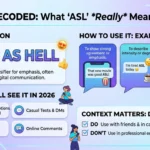
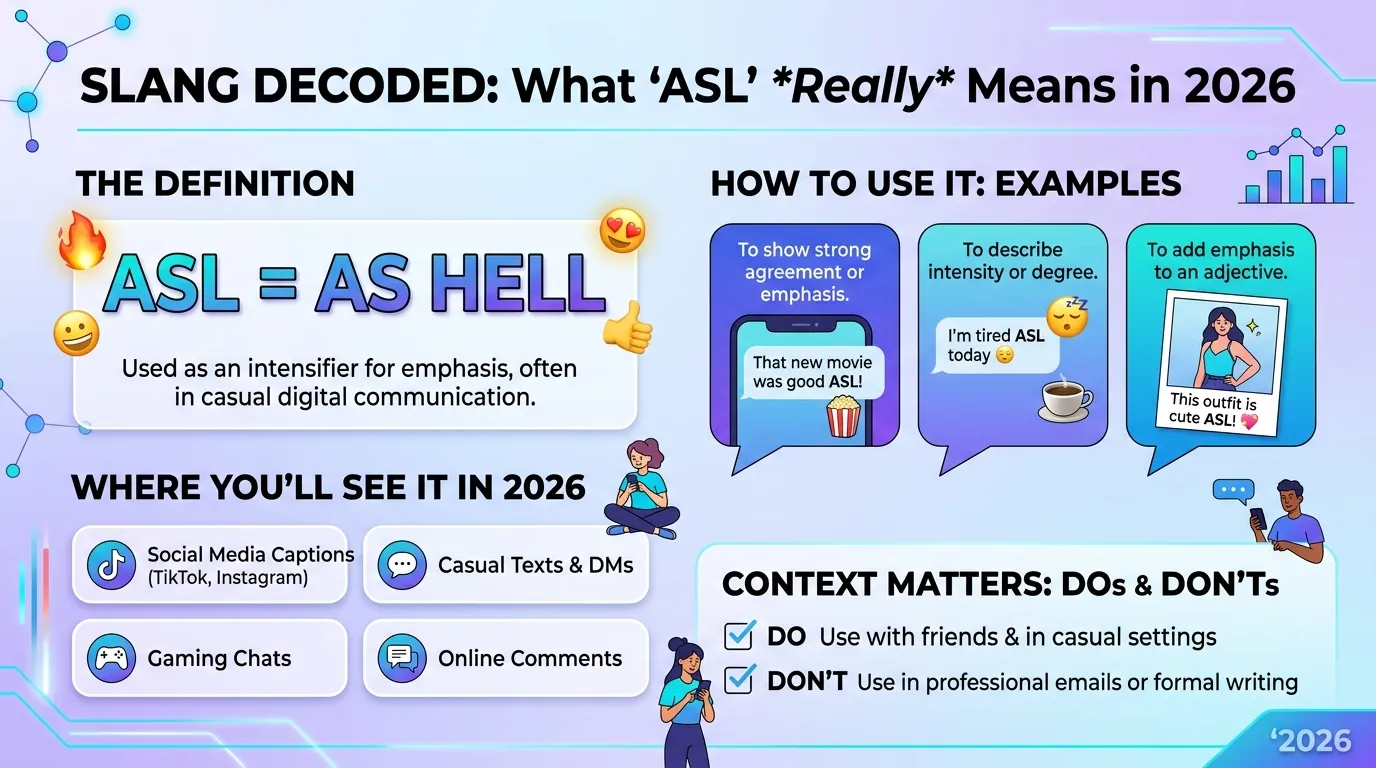
1. ASL = “As Hell” (New Slang Meaning)
In modern texting and social media, ASL often means “as hell”, used to intensify a statement.
Examples:
- “I’m tired ASL” → I’m very tired
- “That movie was boring ASL” → Extremely boring
- “It’s hot ASL today” → Very hot
👉 This version is now more common than the original meaning in casual conversations.
2. ASL Still Means “Age, Sex, Location” (But Less Common)
The original meaning hasn’t disappeared—it’s just used less frequently.
You might still see it:
- In online chatrooms
- On dating apps (occasionally)
- In nostalgic or meme contexts
3. ASL Can Also Mean American Sign Language
Outside of slang, ASL is widely known as:
American Sign Language
This is a complete visual language used by the Deaf community.
⚠️ Important: Context matters.
- In a serious or educational setting, ASL usually refers to sign language.
- In texting or slang, it often means “as hell.”
How to Tell Which ASL Meaning Is Being Used
Because ASL has multiple meanings, context is everything.
Here’s a quick comparison:
| Context | Meaning of ASL |
|---|---|
| Casual texting | As Hell |
| Chatroom question | Age, Sex, Location |
| Educational discussion | American Sign Language |
Example Breakdown:
- “I’m bored ASL” → As Hell
- “ASL?” → Age, Sex, Location
- “I’m learning ASL” → American Sign Language
How to Use ASL in Texting (With Examples)
✅ Using ASL as “As Hell”
This is the most common modern usage.
- “I’m hungry ASL right now.”
- “This phone is slow ASL.”
- “That exam was hard ASL.”
Tips:
- Use it casually with friends
- Avoid in formal or professional writing
- Works best at the end of a sentence
✅ Using ASL as “Age, Sex, Location”
- “Hey, ASL?”
- “ASL before we chat?”
Tips:
- Be cautious—this can feel outdated or intrusive
- Not recommended for professional or respectful conversations
Common Variations and Similar Slang Terms
If you understand ASL, you’ll also recognize similar slang expressions:
Slang Similar to “ASL” (As Hell)
- AF (As F*):** “I’m tired AF”
- Mad: “That’s mad funny”
- Super: “I’m super tired”
- Dead: “I’m dead tired”
Slang Similar to “ASL” (Age, Sex, Location)
- WYA: Where you at?
- HMU: Hit me up
- WYLL: What you look like
Examples of ASL in Real Conversations
Example 1 (Modern Slang):
- Friend 1: You good?
- Friend 2: Nah, I’m stressed ASL
👉 Meaning: Very stressed
Example 2 (Old Chat Style):
- User: Hey
- Other: ASL?
- User: 21/M/London
👉 Meaning: Asking personal details
Example 3 (Mixed Context Confusion):
- “I’m learning ASL”
👉 Could mean: - Learning sign language
- (Rarely) Could confuse someone expecting slang
Common Misunderstandings About ASL
❌ Mistake 1: Thinking ASL Always Means “Age, Sex, Location”
👉 Reality: Today, it usually means “as hell”
❌ Mistake 2: Using ASL in Formal Writing
👉 It’s slang—avoid in:
- Emails
- Job applications
- Academic work
❌ Mistake 3: Confusing ASL with Sign Language
👉 Always check context before interpreting
When You Should (and Shouldn’t) Use ASL
✅ Use ASL When:
- Texting friends
- Posting casually on social media
- Expressing strong emotions
❌ Avoid ASL When:
- Speaking professionally
- Messaging strangers (especially “Age, Sex, Location”)
- Writing formal content
Why ASL Became Popular Again
The slang version (“as hell”) gained popularity due to:
- Social media trends (TikTok, Twitter/X)
- Short-form texting habits
- Preference for quick, expressive language
It’s simple, catchy, and easy to use—making it perfect for modern communication.
SEO Keywords and Related Terms
To fully understand and rank for this topic, here are related terms naturally connected to ASL meaning slang:
- asl meaning in text
- asl slang meaning 2026
- what does asl mean in chat
- asl meaning tiktok
- asl abbreviation meaning
- asl texting examples
- modern internet slang meanings
Frequently Asked Questions (FAQs)
1. What does ASL mean in texting?
ASL usually means “as hell” in modern texting. It’s used to emphasize something strongly.
2. Is ASL rude or inappropriate?
Not necessarily. It’s casual slang, but it can sound informal. Avoid using it in professional settings.
3. Does ASL still mean Age, Sex, Location?
Yes, but it’s outdated and less commonly used today.
4. What does ASL mean on TikTok?
On TikTok, ASL almost always means “as hell.”
5. Can ASL mean something else?
Yes, it can also mean American Sign Language, depending on context.
6. Should I use ASL in professional messages?
No. It’s best to avoid slang like ASL in formal communication.
7. What’s the difference between ASL and AF?
Both mean similar things (“very” or “extremely”), but AF is more explicit, while ASL is slightly softer.
Final Thoughts
The meaning of ASL in slang has shifted significantly over time. While it originally stood for Age, Sex, Location, today it’s more commonly used as “as hell” to emphasize emotions or experiences.
Key Takeaways:
- ASL = As Hell (most common modern use)
- ASL = Age, Sex, Location (older meaning)
- ASL = American Sign Language (formal context)
Actionable Tips:
- Always consider context before interpreting ASL
- Use it casually—but avoid formal settings
- Stay updated with evolving slang trends
Understanding slang like ASL helps you stay connected, relevant, and confident in online conversations. Language is always evolving—and knowing how to adapt is what keeps communication clear and engaging.