Comedy Clubs Are Ghosting Puns — But Are They Reading the Room or Misreading the Crowd?
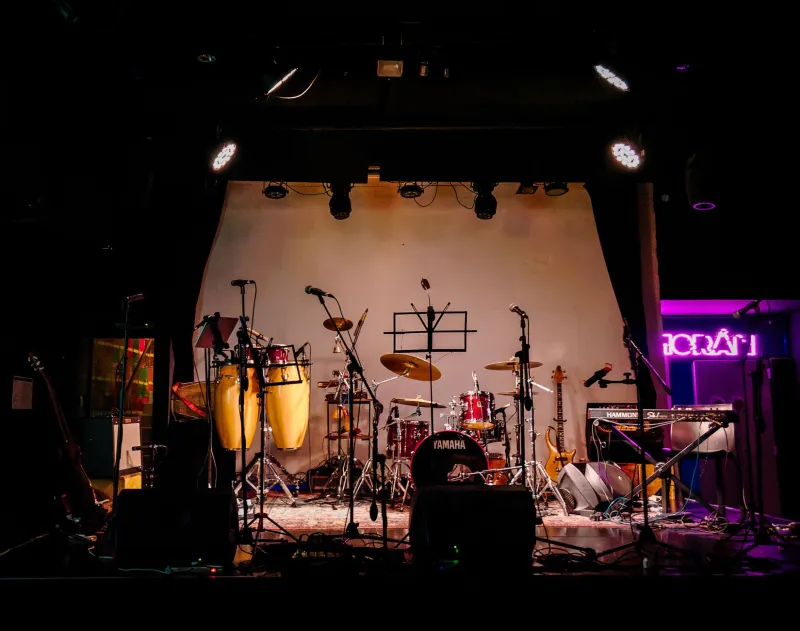
Walk into almost any mid-sized comedy club in America right now and you'll notice something missing. It's not the two-drink minimum. It's not the sticky floors or the emcee who's been doing this since the Clinton administration. What's conspicuously absent is the pun — that glorious, groan-inducing, wordplay-powered engine of human delight that once had audiences simultaneously covering their faces and begging for more.
Somewhere between 2020 and today, a quiet but significant shift happened in live comedy venues. The pun-heavy act — the comedian who built their set around double meanings, homophones, and linguistic sleight of hand — has become about as common on club lineups as a flip phone at a tech conference. And the people booking these shows? They're not apologizing for it.
The Bookers Have Spoken, and They're Speaking in Plain English
Talk to enough comedy club talent buyers and a pattern emerges quickly. "Audiences want to feel seen, not stumped," said one club manager at a venue in Austin who books talent three nights a week. "When someone has to pause and decode a joke, you lose the room. Observational stuff — traffic, relationships, your weird uncle — lands clean every time."
This sentiment is echoed from Chicago to Charlotte. The conventional wisdom hardening inside the industry is that puns require cognitive effort, and modern audiences — fatigued, distracted, and nursing a $14 cocktail — don't want to work for their laughs. They want the joke delivered to the door like a pizza: hot, fast, and requiring zero assembly.
But here's where it gets interesting. This logic assumes that puns are universally demanding. And that assumption might be the flimsiest premise in comedy right now.
Comedians Are Pushing Back — Hard
Ask the performers themselves and you get a very different story. Comedians who built their acts around wordplay aren't just frustrated with the booking trends; they're genuinely baffled by the reasoning behind them.
"The idea that puns are too complicated is condescending to audiences," says one touring comedian who asked to remain anonymous because, as he put it, "I still need these clubs to call me back." "A good pun lands in half a second. It's not a math problem. The groan IS the laugh. That's the whole mechanism."
He has a point that's hard to argue with. The pun's power was never about demanding intellectual labor — it was about the sudden recognition of a double meaning, that tiny electric shock when your brain catches the trick. It's arguably faster than most observational humor, which often requires setup, context, and a shared cultural reference point to even get off the ground.
Other performers point to the rise of social media as evidence that puns are anything but dead. Wordplay content absolutely dominates certain corners of TikTok and Instagram. If audiences were truly fatigued by puns, they'd be scrolling past them. Instead, pun videos routinely rack up millions of views. The gap between what comedy clubs think people want and what people are actually consuming on their phones is, at this point, practically a canyon.
The Observational Safety Blanket
So why the retreat to observational humor? Part of the answer is risk management. Observational comedy is the industry's equivalent of comfort food — reliable, broadly appealing, and unlikely to alienate anyone in the third row. For a club owner trying to fill seats on a Tuesday, "safe" has enormous financial appeal.
There's also a generational assumption baked into these booking decisions. Many club managers came up in an era when the comedians they admired — Seinfeld, Ray Romano, the whole late-night circuit of the '90s — were primarily observational. That template calcified into a default setting, and now it's influencing lineups even as the cultural landscape has shifted dramatically around it.
"The bookers are booking for the audience they remember, not the audience that's actually in the seats," argues a comedy writer who works in both live and digital spaces. "The people coming to shows in 2024 grew up on meme culture. They are fluent in wordplay. They WANT puns. The clubs just aren't offering them."
What the Audiences Actually Say
Ask real comedy club patrons — not talent buyers, not industry insiders — and the results are genuinely surprising. Informal surveys conducted at clubs in New York, Los Angeles, and Nashville consistently show that audiences rank unexpected, clever wordplay among their favorite laugh moments of the night. The catch? They rarely see it anymore, so they've stopped expecting it.
This creates a self-fulfilling prophecy at the club level. Pun acts aren't booked because they're not "what audiences want." Audiences stop seeing pun acts and stop asking for them. Clubs interpret the silence as confirmation. The pun slowly disappears from the menu, and everyone assumes it was always unpopular.
It's less a pun recession and more a pun supply chain problem.
The Verdict: Fatigue or Failure of Imagination?
The honest answer is that this isn't really about audience fatigue at all. Comedy clubs are making a conservative business calculation dressed up as an artistic read on the culture. The pun hasn't worn out its welcome with the public — it's been quietly disinvited by gatekeepers who conflate "safe" with "good."
The irony, of course, is that the funniest thing about the whole situation is entirely unintentional: the industry trying to protect itself from risk by playing it straight is the biggest joke of all. And unlike the puns they're booking out of existence, nobody's laughing.