Can You Hear the Punchline? How the Wordplay World Is Finally Waking Up to Deaf Audiences
Puns, by their very nature, are sneaky little linguistic creatures. They hide a second meaning inside a first one, waiting for the moment your brain catches the overlap and fires off that tiny burst of delighted recognition. It's a cognitive magic trick — and for most of comedy's history, that trick has been performed almost exclusively in sound. A word that sounds like another word. A phrase that plays on pronunciation. The whole architecture of wordplay, as it's traditionally understood, is built for ears.
Which creates a problem that the booming pun-comedy ecosystem has been conspicuously slow to address: what about the roughly 15% of American adults who live with some degree of hearing loss? What about the estimated 1 million Americans who are functionally deaf? When the comedy world congratulates itself on the pun renaissance — the viral TikToks, the clever brand tweets, the wordplay-heavy game shows — it's celebrating a party where a significant chunk of potential guests were never actually invited.
"Comedy has always had an accessibility problem, but pun comedy specifically is almost architecturally exclusionary," says comedian and ASL performer Jordan Reeves, who has been performing in both English and American Sign Language for over a decade. "The entire premise of most puns is phonetic. Two words sound alike. One word sounds like a phrase. It's all ears. If you take the sound away, a huge percentage of what passes for wordplay just… collapses."
The Captioning Gap Nobody Wants to Talk About
Before we get to solutions, let's sit with the problem for a moment, because it's worse than most people realize.
Captioning — the first and most obvious accessibility tool — handles the issue only partially. Accurate captions can certainly convey the words of a pun. But they struggle enormously with the timing, which in comedy is often the entire point. The beat. The pause. The rhythm of a setup that makes the punchline land. Automated captions, which remain the dominant form across most major platforms, are notoriously unreliable with wordplay specifically, because puns frequently hinge on unusual word choices and unconventional sentence structures that confuse speech-recognition algorithms.
"I've watched captioned comedy specials where the pun — the actual joke — gets transcribed as something completely different because the auto-caption didn't recognize the word the comedian intended," says accessibility advocate and content creator Maya Chen, who is hard of hearing and runs a disability-focused media criticism blog. "The whole joke disappears. You're reading captions that say something grammatically sensible but entirely unfunny, and you have no idea you just missed the punchline."
The platforms bearing the most responsibility here are also, somewhat predictably, the ones moving the slowest. TikTok's auto-captions have improved, but they remain inconsistent with rapid-fire wordplay. YouTube's captions are creator-dependent, meaning the quality varies wildly. Most comedy club livestreams and streaming specials still treat captions as an afterthought rather than a design requirement.
ASL Comedy and the Visual Pun Revolution
Here's where things get genuinely exciting, though — and genuinely funny, which is the whole point. Because it turns out that when you strip away the phonetic crutch that most pun comedy leans on, you're forced to get creative in ways that can produce comedy that's arguably more sophisticated and certainly more inclusive.
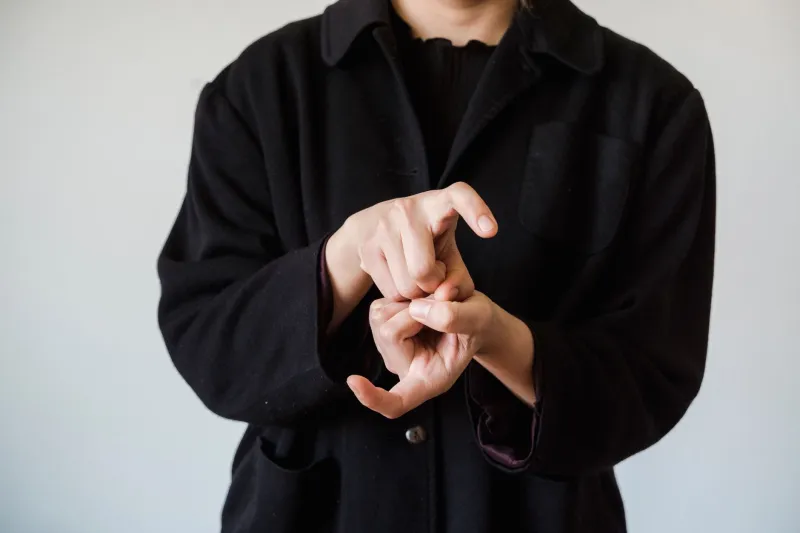
American Sign Language is not simply English rendered in gesture. It's a complete, independent language with its own grammar, syntax, and — crucially for our purposes — its own rich tradition of wordplay. ASL puns are real. They're often hilarious. And they work through entirely different mechanisms than spoken puns, relying on visual similarities between signs, handshape overlaps, and spatial humor that sighted audiences can appreciate regardless of whether they can hear.
Comedian and ASL performer Tamika Rousseau has been building an audience on social media by performing what she calls "bilingual puns" — jokes that work simultaneously in spoken English and ASL, layering two different wordplay traditions into a single comedic moment.
"When I sign and speak a pun at the same time, something interesting happens," Rousseau explains. "Hearing audiences get the phonetic joke. Deaf audiences get the visual joke. And sometimes — when I've really nailed it — both audiences are groaning at the same moment for completely different reasons. That's the holy grail. That's when comedy is actually doing what it's supposed to do."
Visual Puns: The Format That Levels the Playing Field
Beyond ASL performance, a growing community of creators is exploring visual puns — wordplay that operates entirely through imagery, text on screen, and visual juxtaposition rather than sound. This format has deep roots in print comedy, comic strips, and internet meme culture, but it's being deliberately developed as an accessibility tool by creators who understand the exclusion problem.
Think of a visual pun as a joke where the image and the text create the double meaning, rather than two words that happen to sound alike. The humor emerges from what you see, not what you hear. For deaf and hard-of-hearing audiences, this isn't just accessible — it's often preferable, a format designed with their primary sense front and center rather than retrofitted after the fact.
"Visual puns are having a moment, and I think part of why is that they're genuinely funnier in certain contexts," says digital content strategist and accessibility consultant Derek Nwosu. "A well-constructed visual pun makes you look twice. It rewards attention. That's the same cognitive mechanism as a spoken pun, just through a different channel. And it works for everyone — deaf, hearing, hard of hearing, people watching videos on mute on their lunch break."
What Platforms and Clubs Could Actually Do
The gap between where the industry is and where it needs to be is wide, but it's not unbridgeable. Advocates and creators are remarkably consistent about what meaningful progress would look like.
For streaming platforms and digital creators, the ask is straightforward: invest in human-reviewed captions for comedy content, because automated captions simply aren't reliable enough for the precision that wordplay requires. Add visual text overlays that highlight puns as they occur, giving hard-of-hearing viewers the context they need to catch the joke in real time.
For live venues, the solutions are harder but not impossible. Interpreted comedy shows — performances with ASL interpreters on stage — are still rare, but they're not unheard of. Some clubs have experimented with real-time caption screens positioned near the stage. Others are partnering with deaf comedians to create genuinely bilingual shows rather than treating accessibility as a modification applied to an otherwise unchanged product.
"The difference between accessibility as an afterthought and accessibility as a design principle is enormous," Reeves says. "When you design for deaf audiences from the start, you make comedy that's richer for everyone. You're forced to think about the visual dimension of humor, the timing, the physical performance. Those things make comedy better across the board."
The Punchline Everyone Deserves to Hear
The pun renaissance is real, and it's genuinely wonderful that wordplay has found new audiences and new forms in the digital age. But a revolution that leaves 15% of potential participants on the outside isn't really a revolution — it's just a party with a guest list.
The good news is that the tools exist. The creative frameworks exist. The comedians doing this work exist. What's needed now is for the platforms, venues, and industry gatekeepers to treat accessibility not as a compliance checkbox but as a creative challenge worth taking seriously.
Because here's the pun the comedy world keeps missing: the word inclusive contains the word in. As in, everyone gets in. Even the best joke is only as good as the audience that gets to hear it — or see it, or feel it, or experience it in whatever way works for them. The wordplay revolution deserves to be everyone's revolution.