Robot Walks Into a Bar: Why AI Still Can't Nail a Pun (And Why That's Hilarious)
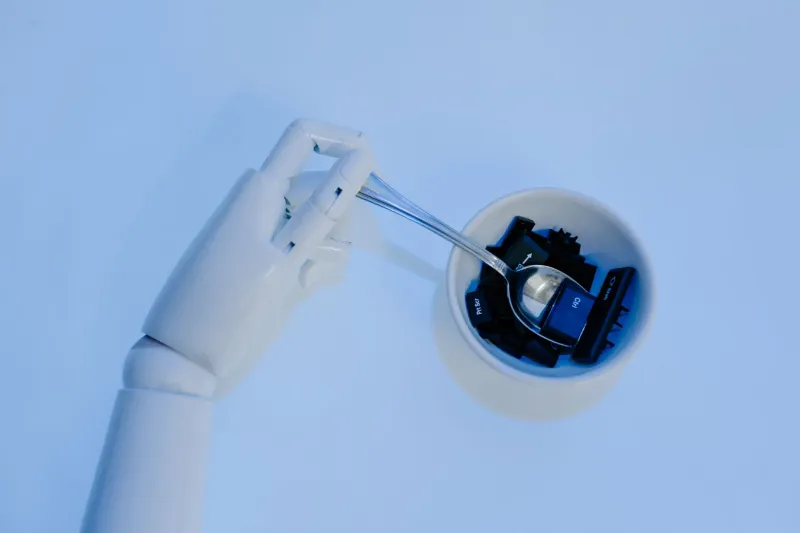
Let's get the obvious joke out of the way first: if an AI could write a truly great pun, it would probably use it to convince you that it was sentient. Fortunately for humanity's dignity — and comedy's job security — we're not there yet. Not even close, actually. Despite the breathless coverage of AI systems that can compose symphonies, pass the bar exam, and generate entire video game worlds from a text prompt, the humble pun remains stubbornly, almost defiantly, resistant to machine mastery.
This is not a small thing. Puns are often dismissed as the lowest form of comedy, the groan-inducing last resort of dads and greeting card writers everywhere. But from a computational standpoint, wordplay is extraordinarily complex — a form of humor that requires simultaneous understanding of phonetics, semantics, cultural context, timing, and the specific social dynamics of the moment in which the joke is delivered. Asking an AI to write a good pun isn't asking it to do something simple. It's asking it to do something that pushes right up against the edges of what language models are actually capable of.
And watching them try? Genuinely one of the funniest things happening in tech right now.
The Uncanny Valley of Algorithmic Humor
You've heard of the uncanny valley in animation — that unsettling zone where a human-looking character is almost right but just slightly wrong enough to make your skin crawl. AI-generated puns live in a comedic equivalent of that valley, and it is a deeply strange place to visit.
Here's what happens when you ask a large language model to generate puns without careful prompting: you get output that is structurally correct but spiritually empty. The AI understands, at some level, that a pun involves two meanings colliding. So it produces sentences where two meanings do technically collide. But the collision feels like a fender-bender in a parking lot rather than the satisfying snap of a well-crafted joke.
Consider this actual output from a popular AI tool when asked to generate a pun about astronomy: "I tried to write a book about planets, but I couldn't find the right space." Technically, "space" has two meanings here. The structure is correct. But there's something flat about it, something that a human comedian would immediately sense needed another pass. The word "space" doing double duty isn't surprising enough, isn't unexpected enough, to generate genuine delight.
Or consider this gem, generated when the prompt asked for a gaming-themed pun: "I told my friend I was playing a game about electricity. He said, 'Watt are you playing?'" Again — technically a pun. "Watt" sounds like "What." Points for effort. But the setup is so thin, the surprise so telegraphed, that the groan it produces is less the appreciative groan of a good-bad pun and more the exhausted groan of someone who just wants the machine to stop.
Why Puns Are Computationally Hard
To understand why AI struggles here, it helps to understand what a pun actually requires. Dr. Rachel Kim, a computational linguistics researcher at a university in California, explains it this way: "A pun isn't just a word with two meanings. It's a word with two meanings deployed at a specific moment, in a specific context, with a specific rhythm, in a way that creates genuine surprise for the listener. Every one of those elements requires a different kind of understanding, and right now, language models are pretty good at some of them and genuinely poor at others."
The surprise element is where AI falls down hardest. Good puns work because they subvert expectation — you're led down one semantic path and then suddenly deposited on another. This requires the model to understand not just what words mean but what a human expects them to mean in a given context, and then to violate that expectation in a way that's satisfying rather than just confusing.
Language models are, at their core, very sophisticated pattern-completion engines. They're excellent at producing what comes next in a sequence. But surprise — genuine, delightful surprise — is almost by definition the opposite of what comes next in a predictable sequence. You cannot train a model on millions of examples of human language and then expect it to reliably produce the thing that no one saw coming. The math doesn't quite work out.
The Funniest AI Pun Failures Are Unintentional
Here's the twist, though, and it's a genuinely interesting one: the funniest AI pun content isn't the puns the AI means to make. It's the puns it makes by accident, the bizarre linguistic collisions that emerge when the model tries to be helpful and produces something completely unhinged instead.
Ask an AI to explain why a pun is funny, and you will frequently end up with something more entertaining than the pun itself. One popular AI assistant, when asked to explain the humor in the classic pun "I used to be a banker, but I lost interest," responded with a paragraph-long analysis that concluded: "The comedy emerges from the financial concept of interest rates being metaphorically applied to personal emotional engagement, which creates a resonant ironic dissonance." Which is technically not wrong. But reading it is somehow funnier than the original joke.
This is the accidental comedy of AI — the humor that emerges from watching a very powerful system try very hard to do something that requires a quality it doesn't quite possess. It's the same energy as a golden retriever attempting to catch a frisbee and accidentally doing a full somersault instead. Adorable. Impressive in its way. Definitely not what was intended.
Does AI Comedy Threaten Human Comedians?
The honest answer, at least for pun-forward comedy, is: not yet, and possibly not ever in the ways people fear.
AI is already being used as a tool by comedy writers — a brainstorming engine that can generate 50 mediocre puns in 30 seconds, letting a human writer sift through for the one that has actual potential. This is genuinely useful. It's the comedy equivalent of using a metal detector on a beach: mostly you find bottle caps, but occasionally you find something worth keeping.
"I use AI for first-pass wordplay generation all the time," says comedy writer and podcast host Marcus Webb, who specializes in game-show style wordplay content. "It's great for volume. It's terrible for quality. I'll ask it to give me 40 puns about video games, and maybe three of them have a kernel of something real. Then I do the actual work of turning that kernel into a joke. The AI didn't write the joke. It gave me raw material."
The deeper question — whether AI will eventually develop the contextual, cultural, and emotional intelligence required to generate genuinely surprising humor — is one that divides researchers. Some argue it's inevitable, that sufficiently large and sophisticated models will eventually crack the surprise problem. Others contend that humor, especially wordplay, requires a form of embodied cultural understanding that no language model can truly replicate, no matter how many parameters it has.
The Punchline
For now, the pun remains stubbornly human territory — a tiny linguistic act that requires, at its core, a kind of playful intelligence that our best machines haven't managed to fake convincingly. And there's something oddly comforting about that. In a world where AI is eating into creative fields with alarming speed, the humble pun stands as a small but genuine proof of concept for irreplaceable human wit.
Also, watching robots try to be funny and fail spectacularly is, itself, a form of entertainment that we at PunGalaxy are fully prepared to monetize. We've already asked three different AI tools to write us a pun about black holes.
All three of them said something about "sucking."
We're not sure they understood the assignment. But we're definitely using it anyway.